
Simple Stretches You Can Do at Your Desk
Long hours at a desk can leave your body feeling stiff, tense, and drained. Even when you’re mentally focused, your muscles often hold onto stress—especially in your neck, shoulders, back, and hips. Desk-friendly stretches offer a simple, effective way to release tension, improve posture, and refresh your energy without leaving your workspace.
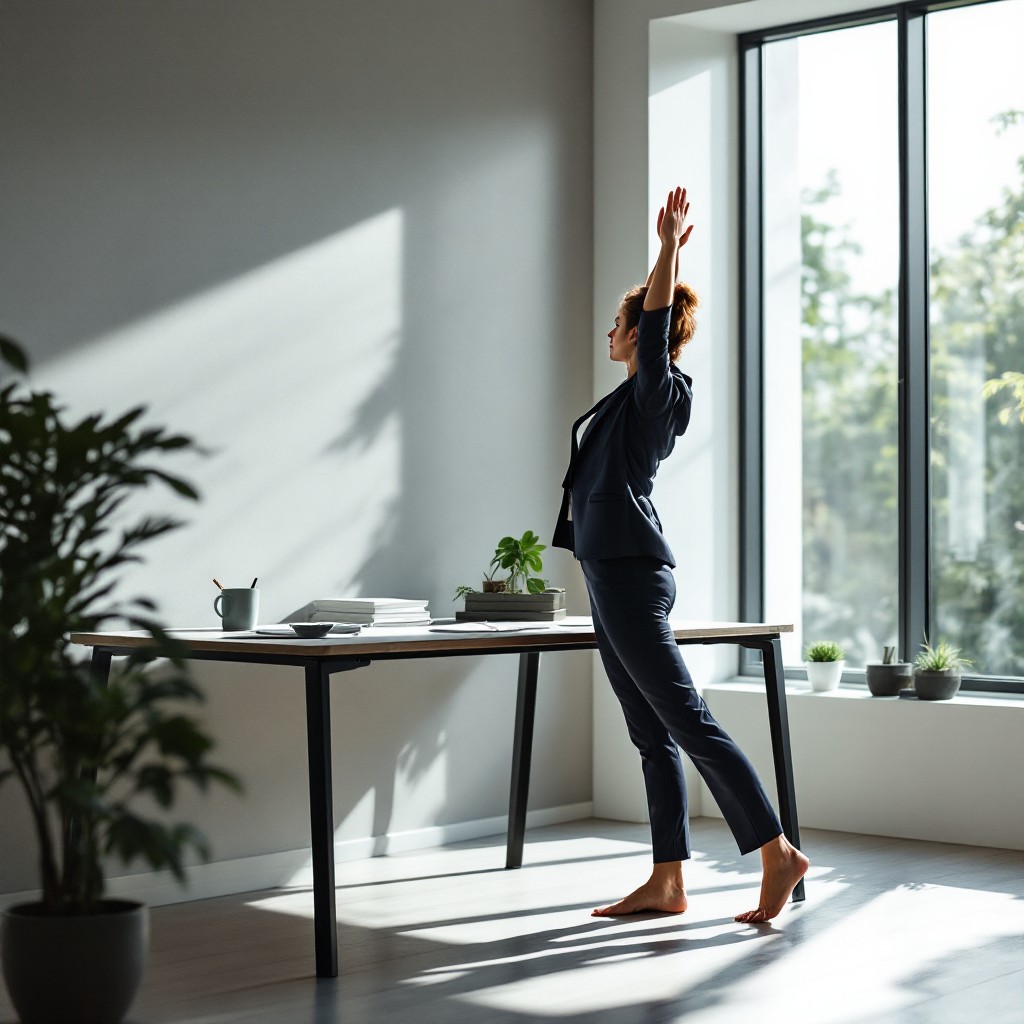
This guide explores gentle stretches you can do at your desk in just a few minutes. It also connects naturally with related topics like mini wellness breaks, light movement routines, posture resets, micro-walks, and midday rituals that support mind–body balance.
Why desk stretches matter
Sitting for long periods can cause:
- Neck and shoulder tension
- Lower back discomfort
- Hip tightness
- Reduced circulation
- Fatigue and sluggishness
Desk stretches help counteract these effects by improving blood flow, releasing muscle tension, and giving your mind a quick reset.
How often should you stretch?
Short, frequent stretches are more effective than long, occasional sessions. Aim for:
- 30–60 seconds of stretching every hour
- A 2–3 minute stretch break between tasks
- A longer reset during your midday ritual
These small habits add up to significant improvements in comfort and focus.
Stretch 1: Neck release
This stretch helps relieve tension from looking at screens for long periods.
How to do it:
- Sit tall with your shoulders relaxed.
- Gently tilt your head toward your right shoulder.
- Hold for 15–20 seconds.
- Repeat on the left side.
For a deeper stretch, place your hand lightly on the side of your head and apply gentle pressure.
Stretch 2: Shoulder rolls
Shoulder rolls help release upper-body tension and improve posture.
How to do it:
- Lift your shoulders toward your ears.
- Roll them back and down in a circular motion.
- Repeat 10 times.
- Reverse the direction for another 10 rolls.
This stretch pairs well with a quick posture reset.
Stretch 3: Upper back stretch
This stretch helps counteract the rounded posture that often comes from typing or leaning forward.
How to do it:
- Interlace your fingers in front of you.
- Reach your arms forward, palms facing out.
- Round your upper back and gently tuck your chin.
- Hold for 20–30 seconds.
You should feel a gentle stretch between your shoulder blades.
Stretch 4: Chest opener
This stretch helps reverse the tightness that builds from hunching over a desk.
How to do it:
- Sit tall and clasp your hands behind your back.
- Gently lift your chest and open your shoulders.
- Hold for 15–20 seconds.
If clasping your hands is uncomfortable, hold the sides of your chair instead.
Stretch 5: Seated spinal twist
This stretch helps release tension in your lower back and improve mobility.
How to do it:
- Sit tall with your feet flat on the floor.
- Place your right hand on the back of your chair.
- Gently twist your torso to the right.
- Hold for 15–20 seconds.
- Repeat on the left side.
Move slowly and avoid forcing the twist.
Stretch 6: Wrist and forearm stretch
Typing and mouse use can create tension in your wrists and forearms.
How to do it:
- Extend one arm forward with your palm facing down.
- Use your other hand to gently pull your fingers downward.
- Hold for 15 seconds.
- Flip your palm upward and repeat.
- Switch arms.
This stretch is especially helpful during mini wellness breaks.
Stretch 7: Hip opener
Sitting for long periods tightens the hips and reduces circulation.
How to do it:
- Sit tall with your feet flat on the floor.
- Cross your right ankle over your left knee.
- Gently lean forward until you feel a stretch in your hip.
- Hold for 20–30 seconds.
- Switch sides.
This stretch helps counteract lower-body stiffness.
Stretch 8: Seated hamstring stretch
This stretch helps release tension in the back of your legs, which can affect your posture.
How to do it:
- Sit on the edge of your chair.
- Extend one leg forward with your heel on the floor.
- Keep your back straight and hinge forward slightly.
- Hold for 20–30 seconds.
- Switch legs.
Stretch 9: Ankle circles
Ankle mobility helps improve circulation and reduce stiffness from sitting.
How to do it:
- Lift one foot slightly off the floor.
- Rotate your ankle in slow circles.
- Do 10 circles in each direction.
- Switch feet.
This stretch pairs well with micro-walks throughout the day.
How to build a desk-stretch routine
A simple routine can help you stay consistent and energized.
Try this 2-minute sequence:
- 10 seconds of neck release
- 10 shoulder rolls
- 20 seconds of upper back stretch
- 20 seconds of chest opener
- 20 seconds of wrist stretch
- 20 seconds of hip opener
Repeat this sequence during your midday ritual or between tasks.
How desk stretches support mind–body balance
Desk stretches help you:
- Release physical tension
- Improve posture and alignment
- Boost circulation and energy
- Reduce stress and mental fatigue
- Stay grounded during busy days
They’re a simple way to reconnect with your body during long periods of screen time.
Summary / Key takeaways
Desk stretches are quick, gentle movements that help you release tension, improve posture, and refresh your energy throughout the day. By practicing neck releases, shoulder rolls, spinal twists, wrist stretches, hip openers, and other simple movements, you can counteract the effects of long hours at a desk. When combined with mini wellness breaks, light movement routines, posture resets, micro-walks, and midday rituals, desk stretches become a powerful foundation for mind–body wellbeing.
Reviewed by HGH Editorial